Follow Us :

PharmaGuru – Global Training for Pharmaceutical Careers

Blog

Avatar of Dr Pramod Kumar Pandey

By Dr Pramod Kumar Pandey - August 16, 2025

Dr. Pramod Kumar Pandey, PhD (Chemistry), is the Founder of PharmaGuru.co and a senior Analytical Research Expert with over 31 years of experience in the pharmaceutical industry. He specializes in analytical method development and validation, pharmaceutical research, quality control, quality assurance, and regulatory compliance, and has contributed to analytical innovation and quality excellence across leading Indian and global pharmaceutical companies. Contact: admin@pharmaguru.co

Chiral Gas Chromatography (Chiral GC) is a powerful separation technique used to resolve enantiomers—molecules that are non-superimposable mirror images of each other—based on their differential interactions with a chiral stationary phase. Because different enantiomers of a compound can exhibit distinct biological activities, separating and controlling unwanted isomers is critical in the development of Active Pharmaceutical […]

What Is Chiral GC (Gas Chromatography): Learn With FAQs

Chiral Gas Chromatography (Chiral GC) is a powerful separation technique used to resolve enantiomers—molecules that are non-superimposable mirror images of each other—based on their differential interactions with a chiral stationary phase.

Because different enantiomers of a compound can exhibit distinct biological activities, separating and controlling unwanted isomers is critical in the development of Active Pharmaceutical Ingredients (APIs). Ensuring optical purity helps guarantee the safety, efficacy, and consistency of pharmaceutical products.

Chiral GC is widely employed to determine the enantiomeric purity of volatile or semi-volatile pharmaceuticals during all stages of drug development. It provides results that are fast, specific, precise, accurate, and highly reliable. Another advantage is that Chiral GC is often more cost-effective than Chiral HPLC, making it an attractive choice for routine quality control.

However, developing a robust chiral GC method can be challenging due to the subtle physicochemical differences between enantiomers and the need for carefully selected chiral stationary phases.

In this article, I will share my experience and practical insights on this topic. We will explore chiral stationary phases used in GC, how to select the most appropriate phase for a given application, and the advantages each type offers. By the end, you will have a deeper understanding of the key principles—and the practical secrets—behind successful Chiral Gas Chromatography.

What Is Chiral  GC
What Is Chiral GC (Gas Chromatography): Learn With FAQs 7

Chiral GC is a powerful technique used to separate and analyse volatile chiral pharmaceuticals.

Takeaway

What is chiral Gas chromatography?

Chiral GC is a separation technique used to separate enantiomers (molecules that are mirror images of each other) based on their interaction with a chiral stationary phase.

How does chiral gas chromatography work?

When a chiral molecule enters a GC column with a chiral stationary phase, each enantiomer interacts differently with the stationary phase. The enantiomer that interacts more strongly elutes later, while the one with weaker interaction elutes first. As they exit the column, each isomer is detected separately, producing distinct peaks on the chromatogram.

What is the principle of chiral gas chromatography?

A chiral gas chromatography column contains a stationary phase and a carrier gas as a mobile phase. The enantiomer that interacts more strongly with the stationary phase elutes later, while the one with weaker interaction elutes first

What is the mechanism of chiral chromatography?

In chiral chromatography, separation is achieved by the inclusion complexing and hydrogen bonding while using cyclodextrin CSPs

Can chiral separation be achieved using GC?

This can be achieved by GC using chiral capillary column

What are the limitations of Chiral gas chromatography?

Not suitable for non volatile Chiral molecules like steroids, amino acids, Carbohydrates and Antibiotics.

What is Chiral GC?

Chiral GC is a type of gas chromatography specifically designed to separate chiral compounds—molecules that have non-superimposable mirror images, known as enantiomers. These enantiomers have identical physical properties but can have vastly different biological effects. This difference is especially important in the pharmaceutical industry, where one enantiomer may have therapeutic effects, and the other could be inactive or even harmful.

In standard GC, separation is based on differences in the boiling points, polarity, and volatility of the compounds being analysed. However, for chiral molecules, standard GC is not enough because enantiomers often behave the same in terms of their physical properties. Chiral GC tackles this problem by using a chiral stationary phase (CSP), which interacts differently with each enantiomer, allowing them to be separated.

You May Like

  1. Relative Response Factor (RRF) in Pharmaceutical Analysis
  2. How To Control Impurities In Pharmaceuticals: Get Mastery In 11 Minutes
  3. How To Calculate Potency, Purity and Assay In Pharmaceuticals

Why Chiral GC Matters?

Chirality is at the heart of many chemical and biological processes. The concept of chirality has broad implications, especially in areas such as:

Many drugs, such as thalidomide, ibuprofen, and L-DOPA, are chiral compounds. Often, one enantiomer is effective, while the other can cause adverse side effects. For example, the (S)-enantiomer of ibuprofen is responsible for its anti-inflammatory effects, while the (R)-enantiomer is relatively inactive. Chiral GC is essential in the synthesis, analysis, and quality control of such drugs, ensuring that the correct enantiomer is used in the final formulation.
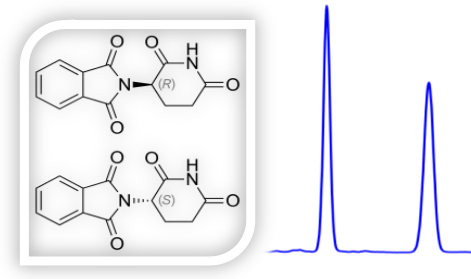
How to Calculate Enantiomeric Excess (ee) by HPLC?
What Is Chiral GC (Gas Chromatography): Learn With FAQs 8

It is also used in other industries like: Food and Flavour Industry, Environmental Monitoring and Forensic Science:

Food and Flavour Industry

The perception of taste and smell often relies on the presence of specific chiral compounds. For instance, the flavour of citrus fruits is affected by chiral molecules like limonene. Chiral GC can be used to separate and quantify these compounds to better understand their role in flavor profiles and ensure consistency in food products.

What is the Need for Chiral Gas Chromatography?

More than 80% of active pharmaceuticals are chiral. The compounds in the human body are also chiral. Therefore, the human body often responds differently to enantiomers; one form may produce the desired effect while the other may be ineffective or toxic. Therefore, it is crucial to separate enantiomers in pharmaceuticals to ensure the desired therapeutic outcomes. Several chromatographic techniques are used for chiral separation, and one of them is Chiral gas chromatography.

Which Stationary Phases are used in Chiral GC columns?

The following chiral stationary phases (CSPs) are widely used in Chiral GC :

  • Cyclodextrin derivative
  • Amino acid derivatives, and
  • Metal coordination complexes.

Among the above CSPs, cyclodextrin-based stationary phases are the most widely used and popular.

What is the Principle and the Separation mechanism in Chiral GC?

Separation is achieved by inclusion complexing and Hydrogen bonding:
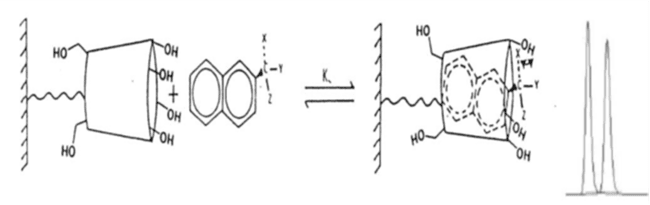
What is the Principle and the Separation mechanism in chiral GC?
What Is Chiral GC (Gas Chromatography): Learn With FAQs 9

Can Achiral impurities be separated along with Chiral isomers?

The answer is yes, and it is a two-dimensional GC technique.

The two-dimensional GC technique is a powerful tool for the separation of achiral isomers as well as enantiomers of Chiral pharmaceuticals. For this, two columns are connected in series using a union. The first column is an achiral column, and the second column is chiral. This heart-cutting technique allows for the selective separation of the target enantiomeric compounds as well as achiral impurities. In a single run, one can get both the achiral impurities profile and the chiral purity of the Enantiomeric molecules.

How Does Chiral GC Work?

Chiral GC works on the same basic principles as conventional GC, but with a twist—literally. Here’s a breakdown of how it functions:

1. Sample Injection

A small amount of the chiral compound is vaporised and injected into the chromatograph.

2. Separation Column

The vaporised sample passes through a chiral stationary phase (CSP) in the GC column. The CSP is typically made from a chiral compound that creates a chiral environment inside the column. This environment will interact differently with each enantiomer of the compound.

3. Enantiomer Interaction

Enantiomers interact with the chiral stationary phase in different ways, leading to different retention times. One enantiomer may be retained longer, while the other passes through the column faster.

4. Detection

After separation, the compound exits the column and is detected by a detector, usually a flame ionisation detector (FID) or mass spectrometer (MS). The detector records the time it takes for each enantiomer to elute from the column, creating a chromatogram that can be analysed.
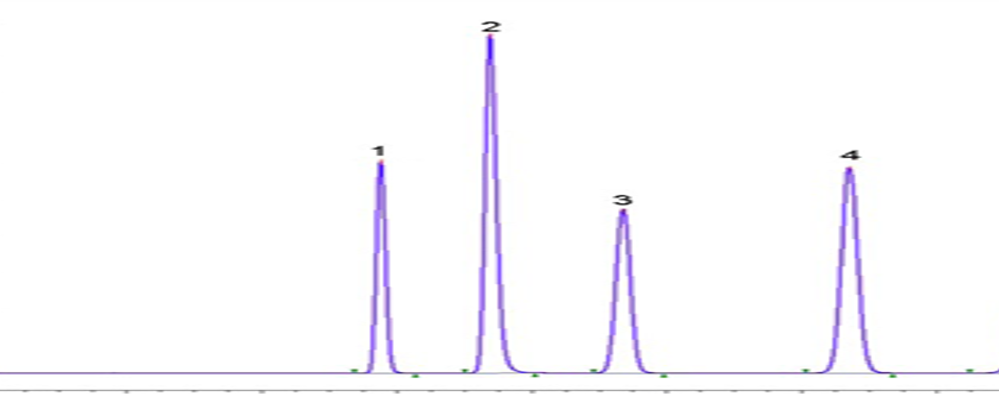
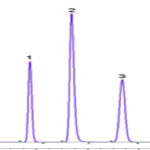
Chiral GC Chromatogram
What Is Chiral GC (Gas Chromatography): Learn With FAQs 10

Chiral Stationary Phases: The Key to Separation

The performance of Chiral GC largely depends on the choice of chiral stationary phase. Some commonly used CSPs include:

  • Cyclodextrins: These are cyclic oligosaccharides that form a chiral cavity, ideal for separating enantiomers of small organic molecules.
  • Crown Ethers: Often used for separating chiral ions or polar compounds.
  • Protein-based CSPs: These mimic natural chiral environments and are used for separating a broad range of chiral compounds.

The choice of CSP depends on the type of compounds being analyzed, as different CSPs interact differently with specific classes of chiral molecules.

What are the Advantages/Benefits of Chiral GC?

Chiral GC offers several advantages, including high efficiency, sensitivity, and fast analysis. That is why this is the widely used technique in pharmaceutical development. The following are the advantages of the Chiral GC:

  • Fast analysis
  • Low analysis cost
  • Reproducible result
  • High column efficiency (N)
  • Sharp and symmetrical peaks
  • Acceptable by Regulatory agencies
  • Easy to validate the method
  • Suitable for volatile molecules
  • High sensitivity or low detection limit
  • The separation of complex samples containing multiple enantiomeric pairs can be achieved through two-dimensional GC (2D-GC) techniques.
  • Chiral GC with a mass detector (GC-MS) can be used for the identification and structure elucidation of unknown isomers during pharmaceutical development
  • High Resolution: Chiral GC allows for the precise separation of enantiomers, even when their physical properties are nearly identical.
  • Quantitative Analysis: It provides accurate quantification of each enantiomer in a sample, which is vital in pharmaceuticals and environmental analysis.
  • Versatility: Chiral GC can be applied to a wide range of chiral compounds, including pharmaceuticals, pesticides, natural products, and more.
  • Minimal Sample Preparation: Chiral GC often requires little or no sample preparation, which makes it a more efficient method compared to other chiral separation techniques like HPLC (High-Performance Liquid Chromatography).

Case Studies: How to develop a chiral purity method for Menthone?

Following is the structure of menthone:
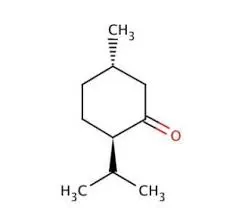
Chiral GC: Menthone structure
What Is Chiral GC (Gas Chromatography): Learn With FAQs 11

Menthone has two chiral centres and hence it will have four chiral isomers. All four chiral isomers can be separated by chiral gas chromatography using Beta Cyclodextrin CSPs.

What are the Challenges and Limitations of Chiral GC?

While Chiral GC is a highly effective technique, it does come with some challenges:

  • Column Lifetime: Chiral stationary phases can degrade over time, especially under harsh conditions, reducing the efficiency of the separation.
  • Complexity: Developing and optimizing a chiral GC method for a new compound can be time-consuming and require considerable expertise.
  • Cost: High-quality chiral stationary phases can be expensive, making the method less accessible for smaller labs or those with limited budgets.

Conclusion

Chiral Gas Chromatography is an indispensable tool for researchers and industries dealing with chiral compounds. Its ability to separate and analyse enantiomers with high precision has made it a cornerstone in areas such as pharmaceuticals, environmental science, food quality control, and forensic investigations. With advancements in stationary phases and detector technologies, Chiral GC continues to evolve, opening up new possibilities for understanding the molecular world around us.

Whether you’re in the lab synthesising the next breakthrough drug or monitoring environmental pollutants, Chiral GC offers a precise and reliable method to tackle the complexities of molecular chirality.

Related:
FAQs

What is a chiral GC method?

Chiral GC Chromatogram

Chiral GC (Gas Chromatography) is a separation technique used to separate enantiomers—molecules that are mirror images of each other—based on their interaction with a chiral stationary phase. This method is essential in industries like pharmaceuticals, where different enantiomers of a compound can have distinct biological effects, ensuring precise analysis and quality control. The figure shows the separation of a chiral molecule containing two chiral centres:

Further Reading

Leave a Reply

error: Content is protected !!