

HPLC solvents are liquid compounds used as part of the mobile phase to carry analytes through the column.
HPLC solvents are liquid compounds used as part of the mobile phase to carry analytes through the column.
High-Performance Liquid Chromatography (HPLC) is one of the most widely used analytical techniques in pharmaceutical development. It is used for separating, identifying, and quantifying compounds in a mixture. Solvents play a crucial role in this process, as they help in the separation of components by interacting with the sample, the stationary phase, and the mobile phase of the chromatographic column.
In this article, I will discuss the importance of solvents in HPLC, the different types of solvents, their characteristics, and how to select the right solvent for your HPLC analysis.
Major Outcome
An HPLC-grade solvent is a high-purity solvent specifically designed for use in High-Performance Liquid Chromatography (HPLC) to ensure accurate and reliable results. These solvents are free from impurities, contaminants, and trace metals that could interfere with the analysis. They are carefully filtered and refined to minimize the risk of chromatographic issues such as baseline noise, contamination of the column, or inaccurate readings from the detector. Typically, HPLC-grade solvents meet strict quality standards and are often labelled with specifications like “for HPLC” or “ultrapure.

Common solvents used in HPLC include water, acetonitrile (ACN), methanol (MeOH), hexane, and acetone. The choice of solvent depends on the type of chromatography being performed (reverse-phase or normal-phase), the polarity of the analytes, and the desired separation conditions. Typically, water is mixed with organic solvents like acetonitrile or methanol to create the mobile phase.
Common liquid solvents in HPLC are water, methanol, Ethanol, isopropanol and acetonitrile
HPLC solvents are liquid compounds used as part of the mobile phase to carry analytes through the column. The mobile phase consists of one or more solvents that, depending on their composition, polarity, and pH, interact with both the stationary phase (usually a column packed with silica or polymer-based materials) and the sample, leading to the separation of the components.
The solvent(s) must be carefully chosen because they directly influence the resolution, sensitivity, and reproducibility of the chromatographic separation. Essentially, the role of HPLC solvents is to help the analytes move through the column at different rates, allowing them to be separated based on their chemical and physical properties.
You May Like
HPLC solvents can be categorised into different types based on their polarity, pH, and the type of chromatography being performed. Here are the main categories of solvents commonly used in HPLC:
These solvents have a high affinity for polar analytes, making them ideal for reverse-phase HPLC (RP-HPLC), which is the most commonly used chromatographic method. Some common polar solvents include:
These solvents are often used for normal-phase HPLC, where the stationary phase is polar and the mobile phase is non-polar. They help separate non-polar analytes based on their interaction with the stationary phase.
Buffered solutions are often used when it’s necessary to maintain a constant pH throughout the analysis. This is crucial for analytes that are sensitive to pH changes.
These are solvents that do not fit neatly into the above categories but are used in specific scenarios, such as in special HPLC techniques like size exclusion chromatography (SEC) or ion-exchange chromatography.
When selecting a solvent for HPLC, several characteristics should be considered to ensure optimal separation and detection. Here are some key properties of HPLC solvents:
High purity is critical to avoid contamination or interference with the analytes and detectors. Reagents should be at least 99.9% pure, and solvents should be free from any impurities that may affect the analysis.
The polarity of the solvent influences how analytes interact with the stationary phase. In reverse-phase HPLC, solvents should be less polar (like acetonitrile or methanol) to elute the analytes effectively. Conversely, in normal-phase HPLC, more polar solvents are required.
The solvent should mix well with the other solvents in the mobile phase. For example, acetonitrile and water are miscible, but certain combinations (e.g., hexane and water) are not, which could hinder the separation process.
The viscosity of the solvent influences the flow rate through the column. Low-viscosity solvents like acetonitrile are often preferred as they reduce the backpressure, leading to a more efficient separation and longer column life.
For UV-based detection methods, the solvent should be transparent to UV light. This ensures that the detector is able to focus on the analyte rather than being blocked by solvent absorbance.
If working with buffers or ionic compounds, it’s important to ensure that the solvent maintains the required pH over time to avoid degrading the sample or compromising the results.
The selection of an appropriate HPLC solvent depends on several factors:
The type of stationary phase also influences solvent selection. A non-polar column (used in normal-phase chromatography) will work best with a non-polar solvent, while a polar column (used in reverse-phase chromatography) requires a polar solvent.
The strength of the solvent in terms of eluting power should also be considered. Strong solvents can help to separate more tightly bound analytes, while weaker solvents may require longer elution times.
Ensure that the solvent is miscible with other solvents in the mobile phase and that it does not form a separate phase, which can interfere with the separation process.
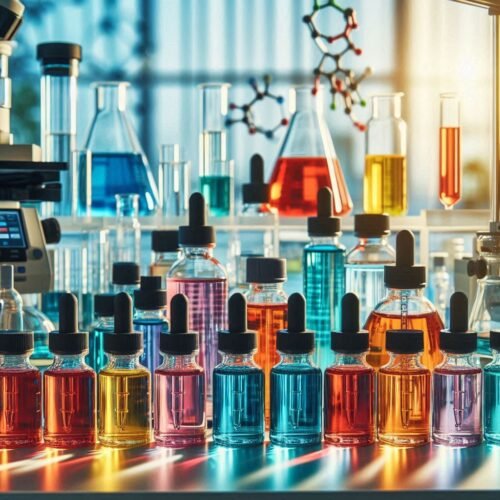
Solvents in HPLC are not just simple carriers; they play a vital role in the separation, resolution, and identification of components in a sample. Understanding the types, characteristics, and selection criteria for HPLC solvents is crucial for ensuring high-quality analysis.
By choosing the correct solvent based on the analyte type, column type, and detection method, you can optimize your HPLC performance and achieve the best results. Always remember that a little attention to detail in solvent selection can make a world of difference in the accuracy and precision of your HPLC analysis.
Further Reading
Quick Links