

Chromatographic techniques are the backbone of pharmaceutical development. Pharmaceuticals development is impossible without the use of chromatographic techniques. However, most of the chemists don’t know why chromatographic techniques are widely used in pharma industries. That is why I decided to share my skill-based knowledge on ” Need for Chromatographic techniques”. Having read this article all […]
Chromatographic techniques are the backbone of pharmaceutical development. Pharmaceuticals development is impossible without the use of chromatographic techniques. However, most of the chemists don’t know why chromatographic techniques are widely used in pharma industries. That is why I decided to share my skill-based knowledge on ” Need for Chromatographic techniques”. Having read this article all your doubts will be cleared and you will be able to answer questions like:
The following techniques are used as traditional techniques
The above methods are not specific and selective; this means the result obtained by the above method may or may not be correct. That is why pharmaceutical development is impossible using these traditional techniques.
Generally following volumetric titrations are widely used for pharmaceutical analysis:
Note: Gravimetric methods are not correct, which is why this technique is rarely used in pharmaceutical analysis
Generally following spectroscopic methods are widely used for the pharmaceutical analysis:
The term chromatography was given by Tswett in 1906, he also published some papers on liquid chromatography. In 1941, Martin and Synge tried to separate amino acids in wool samples using a column packed with silica gel and a mixture of Butanol and chloroform as a mobile phase. He also explained the theoretical aspect of the procedure and got Nobel Prize in 1952. Since that time LC technique has become a versatile technique available for chemists because of its simplicity and capacity for high resolution.
Types of chromatographic techniques:
The following techniques come under complete chromatography:
It is widely used in industries for qualitative analysis during drug development, e.g. identification tests, related substances tests, purity tests, monitoring the reaction (during drug development), etc. This technique is specific and selective and accepted by all regulatory agencies.
The Rf value of the principal spot obtained from the test solution correspond to that obtained from the standard solution
It is used in industries for qualitative analysis, e.g. identification tests, related substances tests, purity tests, etc. This technique is specific and selective and accepted by all regulatory agencies. This technique is specific and selective and accepted by all regulatory agencies.
The Rf value of the principal spot obtained from the test solution corresponds to that obtained from the standard solution
The following techniques are widely used in continuous chromatography
Both HPLC and GC are specific and selective methods and are widely used in the industries for both qualitative and quantitative analysis.
Case study-1
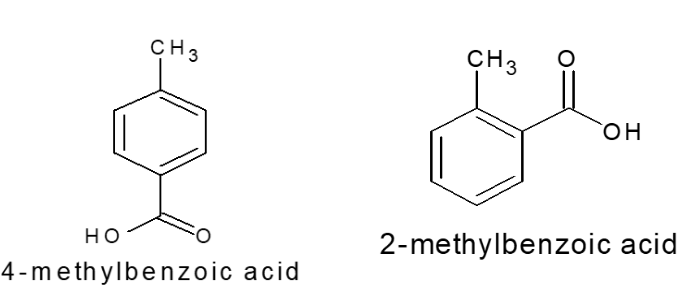
Let us consider a sample containing 4-methyl benzoic acid and 2-methyl benzoic acid in the ratio of 50:50. How content of each be calculated?
Using the chemical method
Since both 4-methyl benzoic acid and 2-methyl benzoic acid are acids, hence can be estimated by using acid-base titration. Since both molecules, 4-methyl benzoic acid and 2-methyl benzoic acid, contain -COOH group and hence both molecules will be titrated simultaneously. Hence, the correct result will not be obtained, and consequently traditional /chemical titration method is not suitable for such a molecule
Using the chromatographic/HPLC method
Since the chromatographic method is selective and specific and hence one can get two peaks (about 50% each) in the chromatogram. That is why the chromatographic method is correct for such molecules
Case study-2
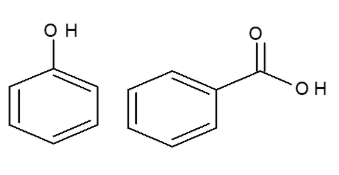
Let us consider a sample that contains phenol and Benzoic acid in a ratio of 10 : 90. How content each will be calculated using the traditional method and the chromatographic method?
Using the chemical method
Phenol contains the -OH group, and Benzoic acid contains the -COOH group, and hence can be estimated by acid-base titration. But acid-base titration will not give the correct result because each -OH group and -COOH group will be titrated simultaneously. Hence, it will be difficult to distinguish between them, and consequently, correct results will not be obtained. Therefore, the traditional /chemical titration method is not suitable for such molecules
Using the chromatographic/HPLC method
Since the chromatographic method is selective and specific in nature and hence one can get two peaks (about 10% Phenol and 90% for Benzoic acid) in the chromatogram. That is why the chromatographic method is correct for such molecules
| S.N | Chromatographic techniques | Traditional techniques |
| 1 | Specific and selective | Not specific and selective |
| 2 | Can be used for both qualitative and quantitative analysis | Mainly used for qualitative analysis |
| 3 | Accepted by all regulatory agencies | Not accepted by all regulatory agencies |
| 4 | Related substance can be performed | Highly sensitive with a low detection limit |
| 5 | Highly sensitive with low detection limit | Low sensitive |
Boost your pharma career with PharmaGuru’s expert-led online courses.: Online Pharma Course (Training)
The chromatographic technique is the backbone of pharmaceutical analysis. That is why it is widely used in the industries. Now I hope all your doubts related to the use of chromatographic techniques and traditional techniques have been cleared. For any doubts or questions related to this post write in the comment section and I will answer them on a priority basis.
You May Like
Chromatographic techniques are widely used in drug development due to their selectivity and specificity,
Chromatography techniques are widely used for
1. Identification test
2. Purity test
3. Related substances test
4. Assay test and
5. Content test
Quick Links