Dr Pramod Kumar Pandey, BSc (Hons), MSc, PhD, is the Founder of PharmaGuru.co and an Analytical Research Expert with 31+ years of experience in the pharmaceutical industry. He is recognized for driving analytical innovation, research excellence, and regulatory-compliant quality advancements across leading Indian and global pharmaceutical companies. He can be contacted at admin@pharmaguru.co
XRD analysis or X-ray diffraction analysis is a vital tool in pharmaceutical development, providing detailed insight into the solid-state properties of drug compounds. It is widely used to identify and quantify polymorphs, assess crystallinity, determine crystal structures, verify phase purity, and study drug–excipient interactions. As a non-destructive analytical technique, XRD delivers precise information about the […]
XRD Analysis In Drug Development: Key Interview Questions and Answers
XRD analysis or X-ray diffraction analysis is a vital tool in pharmaceutical development, providing detailed insight into the solid-state properties of drug compounds. It is widely used to identify and quantify polymorphs, assess crystallinity, determine crystal structures, verify phase purity, and study drug–excipient interactions.
As a non-destructive analytical technique, XRD delivers precise information about the crystallographic structure and physical characteristics of active pharmaceutical ingredients (APIs), excipients, and final formulations. This data is essential for quality control, stability assessment, and ensuring the efficacy and bioavailability of pharmaceutical products. In this article, you will learn about the key roles of XRD in pharmaceutical development, including crystal structure determination, polymorphism analysis, and characterisation of formulation components.
XRD: Bing
XRD Analysis In Drug Development: Key Interview Questions and Answers
What are the advantages and disadvantages of XRD?
XRD is used for both qualitative and quantitative analysis, such as Crystal Structure Determination, Lattice Defects and Strain Analysis, Phase Identification, and Lattice Defects and Strain Analysis
What is the main application of XRD?
XRD is a non-destructive technique that provides detailed information about the crystallographic structure, phase identification, and polymorphism of active pharmaceutical ingredients (APIs), excipients, and final drug products
Can XRD be used for quantitative analysis?
Yes. It can be used for quantitative analysis of polymorphic impurities
Which is better, XRD or XRF?
XRF (X-ray fluorescence) analyzes and quantifies various elements down to sub-ppm levels. XRD provides structural information such as polymorphism, percentage (%) crystallinity and crystallite size for the purpose of ascertaining the structure-property relationship of polymers.
Why is 2 theta used in XRD?
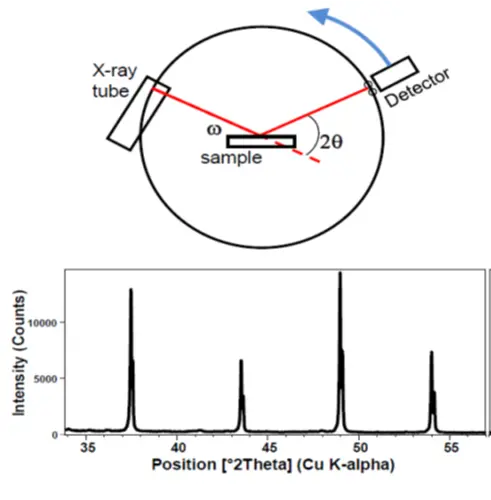
In XRD experiments, the X-ray beam is directed towards the sample, and the angle θ refers to the angle between the incident beam and the crystal plane. However, the X-rays are diffracted at the same angle as they were incident. Therefore, the actual angle between the incident and diffracted X-rays is 2θ (i.e., the total angle the X-ray beam changes as it is scattered).
What does XRD data tell you?
XRD data tells about the polymorphic nature of the APIs
What is XRD in drug development?
X-ray diffraction (XRD) is an analytical technique used in drug development to study the crystal structure, polymorphism, and crystallinity of pharmaceutical compounds, helping ensure product stability, quality, and bioavailability.
How to analyse drugs using X-ray diffraction?
Drugs are analysed by directing X-rays at a powdered or crystalline sample and measuring the diffraction pattern produced. This pattern reveals information about the crystal structure, phase composition, and polymorphic forms of the drug.
What are the XRD analysis examples in drug development?
1. Identifying and quantifying polymorphs of an API 2. Studying crystallinity in solid dispersions 3. Monitoring phase transformations during formulation 4. Confirming solid-state stability in storage studies
How to interpret XRD analysis?
Interpretation involves comparing the diffraction peaks (2θ values) and their intensities with reference data to identify the crystalline phases, determine crystal size, and evaluate the degree of crystallinity in the sample.
What is the full form of SEM and XRD?
XRD identifies the crystal structure and phase composition of materials. EDX (Energy-Dispersive X-ray Spectroscopy) determines the elemental composition of a sample. XRD reveals how atoms are arranged, while EDX shows what elements are present.
What is the working Principle of XRD?
X-ray diffraction (XRD) analysis is a powerful technique used to determine the crystallographic structure, identify phases, and examine other structural properties of materials. The working principle of XRD can be explained using the following 6 elements:
1. X-ray Source:
X-rays are generated by an X-ray tube, which consists of a cathode (heated filament) and an anode (usually made of copper). When high voltage is applied across these components, electrons are accelerated towards the anode and collide with it, causing the emission of X-rays.
2. Interaction with the Sample
Interaction with the Sample: The X-rays are directed onto the sample. When X-rays strike a crystalline material, they interact with the atoms in the crystal lattice. The arrangement of atoms in the crystal acts like a diffraction grating, causing the X-rays to scatter in specific directions.
3.0 Bragg’s Law
The angles at which the X-rays are diffracted depend on the spacing of the planes in the crystal lattice. Bragg’s Law governs this relationship:
nλ=2dsinθ
where:
n is an integer (the order of diffraction),
λ is the wavelength of the X-rays
d is the spacing between crystal planes (d-spacing),
θ is the angle of diffraction.
When the incident X-rays satisfy this condition, constructive interference occurs, resulting in strong diffracted beams.
4.0 Detection of Diffracted X-rays
The diffracted X-rays are collected by a detector, which measures the intensity and angle of the diffracted beams. By rotating the sample or the detector, a diffraction pattern is obtained.
5.0 Data Analysis
The diffraction pattern, which consists of peaks at specific angles, provides information about the crystal structure. The positions (angles) of the peaks correspond to the d-spacings, while the intensity of each peak is related to the arrangement and type of atoms in the crystal.
6.0 Phase Identification and Structural Information
By comparing the obtained diffraction pattern to a database of known patterns, one can identify the phases present in the sample and determine the crystallographic parameters, such as lattice constants and symmetry.
XRD Analysis In Drug Development: Key Interview Questions and Answers 4
What are the Roles of XRD in Pharmaceutical Development?
The following are the key roles of XRD in pharmaceutical development:
Polymorphism refers to the occurrence of different crystal forms of the same compound. These polymorphs can have distinct physical properties, such as solubility, stability, and bioavailability, which are critical for drug efficacy.
XRD helps identify different polymorphic forms of APIs by producing a diffraction pattern unique to each crystal structure. By comparing the XRD patterns, researchers can distinguish between polymorphs and select the optimal one for drug formulation.
Polymorph screening using XRD is essential for ensuring that the most stable and bioavailable polymorph is chosen for further development.
2. Crystal Structure Determination
XRD provides detailed information on the molecular arrangement within the crystalline structure, including unit cell dimensions, symmetry, and orientation. This information is essential for understanding how a drug behaves in the solid state, which affects dissolution rates, stability, and overall therapeutic performance.
In some cases, XRD is used to determine the full 3D structure of the API and its potential interactions with excipients in the formulation.
3. Drug Formulation and Development
In the formulation process, XRD can be used to study the interactions between APIs and excipients, which may influence the stability and release profile of the drug. For example, XRD can detect if an API is amorphous (non-crystalline) or crystalline, both of which have different dissolution behaviours.
Amorphous drugs are often used in formulations to enhance solubility, but their stability can be a concern. XRD can monitor changes in the crystallinity of the drug during processing, storage, or stability testing.
4 Phase Transitions and Stability Testing
XRD is highly useful for monitoring phase transitions, such as polymorphic transformations, amorphization, or crystallisation that may occur during manufacturing, storage, or when exposed to various conditions (temperature, humidity, etc.).
Stability studies rely on XRD to confirm that the drug maintains its intended crystalline form throughout its shelf life. Changes in the diffraction pattern can indicate the formation of new phases or polymorphs that may affect the drug’s efficacy, safety, or shelf life.
6 To Quality of Pharmaceuticals
In the pharmaceutical industry, XRD is employed as part of quality control (QC) and regulatory compliance to ensure that the API and final drug product meet required specifications. Regulatory bodies, such as the FDA and EMA, require comprehensive characterisation data, which often includes XRD analysis.
XRD can verify the polymorphic purity of an API and detect any unintended crystalline or amorphous impurities.
7.0 Particle Size and Morphology Analysis
Scanning electron microscopy (SEM), XRD can be used to estimate particle size distribution in the pharmaceutical product. The peak width in XRD patterns can be related to the size of the crystalline domains, which influences the dissolution rate and bioavailability of the drug.
The morphology of the crystals, which can impact flowability, compressibility, and processing, can also be inferred from XRD patterns.
8.0 Formulation Development for Solubility and Bioavailability
Many drugs, especially poorly water-soluble compounds, are formulated as solid dispersions or nanoparticles to improve their bioavailability. XRD is useful for confirming the degree of crystallinity in these formulations, which can affect dissolution and absorption in the body.
Amorphous solid dispersions (ASDs) are often studied by XRD to ensure that the API remains in its desired amorphous state during storage, as crystallization could reduce the solubility-enhancing effects.
XRD is employed to study the interactions between APIs and excipients in a formulation. These interactions could lead to changes in the physical properties of the drug, such as crystallinity, which might impact stability, solubility, and dissolution.
The technique helps identify any new phases or solid-state reactions between the API and excipients that could affect the formulation’s performance.
10.0 Polymorph Control in Manufacturing
Manufacturing processes can influence the polymorphic form of a drug. XRD can help control and monitor the polymorphic form throughout the production process to ensure consistent drug performance.
This is especially important in scale-up manufacturing, where changes in temperature, pressure, or mixing conditions can lead to unwanted polymorphic forms.
Regulatory authorities often require detailed characterisation of the solid-state properties of drugs during the approval process. XRD data are commonly used to meet regulatory requirements for drug development.
The technique provides high-confidence data on the structural integrity of the API and the final product, supporting the safety and efficacy claims made in drug submissions.
What is the difference between SEM and XRD?
Scanning Electron Microscopy (SEM) and X-ray Diffraction (XRD) are both important techniques used in pharmaceutical characterisation, but they provide different types of information about a sample. They can be differentiated on the following points:
Principle
Information Provided
Sample Preparation
Types of Information
Depth of Analysis
Applications
1. Principle:
SEM (Scanning Electron Microscopy):
SEM uses a focused beam of electrons to scan the surface of a sample. As the electrons interact with the sample, they produce secondary electrons, backscattered electrons, and X-rays, which are detected and analyzed to provide information about the sample’s surface morphology, topography, and composition.
XRD (X-ray Diffraction):
XRD is a technique used to analyze the crystallographic structure of materials. When X-rays are directed at a crystalline material, they are diffracted by the crystal lattice, and the resulting diffraction pattern is used to determine the material’s crystal structure, phase composition, and other properties like crystallite size and strain.
2. Information Provided:
SEM:
Surface morphology and structure (e.g., surface features, roughness).
Elemental composition (using Energy Dispersive X-ray Spectroscopy or EDS, which is often coupled with SEM).
High-resolution imaging of the surface features.
XRD:
Crystalline structure and phases present in the sample.
Lattice parameters, crystallite size, and internal strain.
Identification of specific phases (e.g., whether a material is amorphous or crystalline and what type of crystals are present).
3. Sample Preparation:
SEM:
Samples generally need to be conductive or coated with a thin layer of conductive material (e.g., gold or carbon) if they are non-conductive.
XRD:
Samples need to be in a powdered form, although some studies can be done on thin films or bulk samples.
4. Types of Information:
SEM:
Primarily provides morphological and compositional information, including high-resolution images and elemental maps.
XRD:
Provides crystallographic and structural information, such as phase identification and lattice parameters.
5. Depth of Analysis:
SEM:
Provides information mainly about the surface of the material, with imaging depths typically limited to a few micrometers depending on the electron beam and sample properties.
XRD:
XRD analyzes the material’s bulk structure, with depth of analysis depending on the sample’s thickness and X-ray penetration.
6. Applications:
SEM:
Surface morphology studies, failure analysis, coating thickness measurements, microstructure imaging, and elemental analysis via EDS.
XRD:
Crystal structure determination, phase identification, measuring crystallinity, studying material phases and phase transitions.
How do you identify polymorphs using XRD?
X-ray diffraction (XRD) is a powerful technique for identifying polymorphs of a substance, which are different crystalline forms of the same compound. Polymorphs of a substance have distinct arrangements of molecules or atoms in the crystal lattice, resulting in different diffraction patterns. Follow the following 6 steps to identify polymorphs using XRD:
Prepare the Sample
Collect the XRD Pattern
Analyse the Diffraction Pattern
Compare with Reference Data
Refine the Structure (if required)
Interpret Differences Between Polymorphs
1. Prepare the Sample
Ensure the sample is in a powdered form with a uniform particle size, as this promotes better diffraction.
Use a small amount of the sample, typically in a sample holder designed for XRD analysis.
2. Collect the XRD Pattern
Place the sample in the XRD machine, which generates X-rays and directs them onto the sample.
The X-rays interact with the crystalline structure, producing a diffraction pattern based on Bragg’s law, which relates the angle of diffraction to the spacing between crystal planes.
3. Analyse the Diffraction Pattern
The XRD pattern consists of a series of peaks, each corresponding to a different set of crystal planes. The position (2θ angle) and intensity of these peaks provide information about the unit cell parameters and crystal symmetry.
Each polymorph of a compound has a unique diffraction pattern due to differences in the arrangement of molecules in the crystal lattice.
4. Compare with Reference Data
Compare the experimental XRD pattern with reference databases, such as the Powder Diffraction File (PDF) from the International Centre for Diffraction Data (ICDD), or with known patterns from the literature.
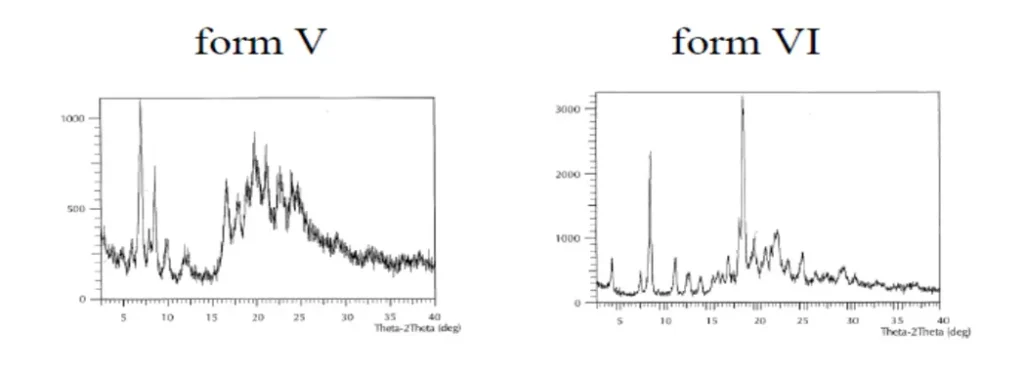
Different polymorphs of the same compound will have distinct diffraction patterns, with different peak positions and intensities.
5. Refine the Structure
If the XRD pattern suggests multiple polymorphs, further analysis can be performed using techniques like Rietveld refinement to determine the exact crystal structures and confirm the polymorph type.
Additional characterisation methods like thermal analysis (DSC, TGA) or spectroscopy (FTIR) can be used to further support polymorph identification.
6. Interpret Differences Between Polymorphs
Polymorphs may differ in the number and position of diffraction peaks, their intensities, and the overall pattern shape.
Compare the XRD data of the unknown sample with those of known polymorphs to identify the specific polymorph present.
By using XRD, polymorphs can be identified based on differences in their diffraction patterns, which arise from differences in their crystal lattice structures. This method is crucial for fields like pharmaceuticals, where different polymorphs of a drug compound can have different solubility, stability, and bioavailability.
What are the XRD Applications?
The following are the key applications of XRD:
Crystal Form/solvate Identification of an API
The 2theta peak position of sample do not deviate by more than 0.2degree from the position of the main peak
Quantitative analysis of phase composition
To characterize the polymorphs
To identify the amorphous material
Crystal Structure
By Rietveld refinement of the entire diffraction pattern
Crystallite Size and Microstrain
Indicated by peak broadening
Other defects (stacking faults, etc.) can be measured by analysis of peak shapes and peak width
XRD data of two different forms of the sample API:
XRD Analysis In Drug Development: Key Interview Questions and Answers 5
Conclusion
XRD plays a crucial role in pharmaceutical development by providing detailed insights into crystallinity, polymorphism, and phase transitions of drug compounds. We hope this article has deepened your understanding of XRD analysis and its importance in the pharmaceutical industry.