
Synthetic drugs are artificially created in laboratories, while natural drugs are directly derived from sources like plants, animals, or microorganisms. Semisynthetic drugs begin with natural compounds that are chemically modified. The key differences lie in their origin, chemical structure, consistency, and regulatory control. Synthetic Vs Natural Drugs: FAQs You May Like: Synthetic Vs Natural Drugs: […]
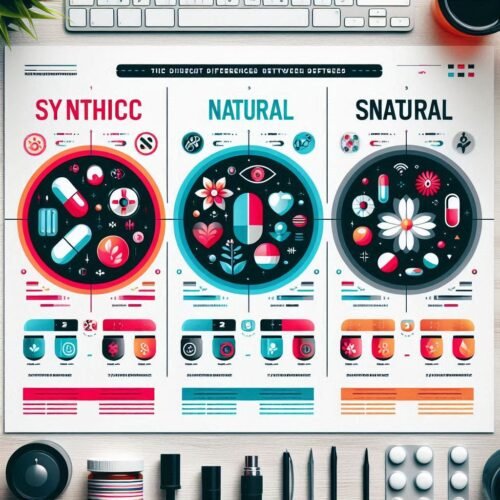
Synthetic drugs are artificially created in laboratories, while natural drugs are directly derived from sources like plants, animals, or microorganisms. Semisynthetic drugs begin with natural compounds that are chemically modified. The key differences lie in their origin, chemical structure, consistency, and regulatory control.
Natural drugs are derived from natural sources like plants or animals, while synthetic drugs are chemically made in laboratories.
Synthetic products are man-made using chemical processes, whereas natural products are obtained directly from nature without chemical modification.
Morphine is a natural drug extracted from the opium poppy plant.
Natural drugs are made from sources like plants, animals, fungi, or microorganisms.
Not always. While some natural drugs have fewer side effects, others can be toxic or interact with medications. Safety depends on the substance and dosage.
Synthetic drugs are preferred for their consistent quality, large-scale production, and ability to be modified for improved effectiveness.
Yes. Some drugs are semi-synthetic, meaning they are derived from natural sources and chemically modified in the lab (e.g., amoxicillin).
They offer high purity, predictable effects, and scalability in production.
ot necessarily. Some natural drugs, like quinine or morphine, are highly effective. Effectiveness depends on the specific drug and condition treated.
Natural drugs can have variable composition, making standardization and dosage control difficult.
They are produced through chemical synthesis in laboratories using designed processes and raw materials.
Acetaminophen (acetaminophen) is a common example of a fully synthetic drug.
Common sources include plants (e.g., foxglove, willow bark), fungi (e.g., penicillin), and animals (e.g., hormones like insulin).
Not always. Both natural and synthetic drugs can cause side effects. Synthetic drugs may have more predictable effects due to their purity.
Natural products often serve as lead compounds or inspiration for developing new drugs due to their biological activity.
You May Like:
| Feature | Synthetic Drugs | Natural Drugs |
|---|---|---|
| Source | Chemically manufactured in labs | Derived from plants, animals, or microorganisms |
| Purity | Usually highly pure and controlled | May contain mixtures of compounds |
| Consistency | Consistent quality and composition | Can vary depending on source and conditions |
| Production Time | Generally faster to produce | Often slower, depends on natural growth cycles |
| Cost of Production | Also regulated, especially in standardised forms | Can be higher due to extraction and purification |
| Modification | Easily modified for improved properties | Limited scope for structural modification |
| Side Effects | May have more side effects due to potency | Often considered milder, but not always safer |
| Regulatory Control | Strict regulatory pathways | Also regulated, especially in standardized forms |
| Examples | Aspirin, Paracetamol, Ibuprofen | Morphine (opium poppy), Quinine (cinchona bark) |
| Usually more stable with a longer shelf life | Usually more stable with longer shelf life | Maybe lower for large-scale synthesis |
Further Reading:
Quick Links