

Modes of Calculation in Chromatography Analysis are essential for accurate quantification, method validation, and reliable results in pharmaceutical testing. Learn key methods like area normalization, calibration curves, internal & external standards, and RRF with FAQs.
Modes of Calculation in Chromatography Analysis play a vital role in ensuring the quality, safety, and consistency of pharmaceutical products. Selecting the wrong calculation method can lead to inaccurate or misleading results, potentially impacting product quality, regulatory compliance, and even a company’s reputation.
In pharmaceutical chromatographic analysis, modes of calculation refer to the different mathematical approaches used to quantify analytes, validate analytical methods, and interpret chromatographic data. These calculation methods are essential for achieving accurate, precise, and reproducible results in quality control, method development, and regulatory submissions. By applying appropriate calculation techniques, laboratories can ensure reliable data that support drug safety, efficacy, and compliance with industry standards.
The following modes of calculation are widely used in chromatographic analysis:

Expert Tip: Both internal standard method and external standard methods are used for only quantitative analysis, such as assay.
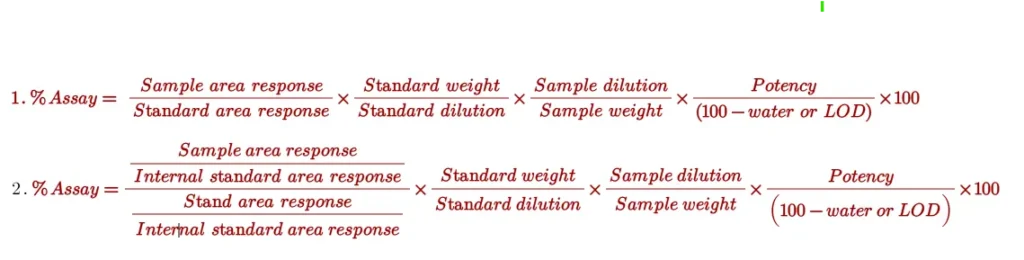

In pharmaceutical chromatographic analysis, accurate and reliable quantification depends on key modes of calculation such as retention time, resolution, peak area, and calibration methods. These calculations ensure proper identification, separation, and quantification of compounds and play a vital role in quality control, method validation, and regulatory compliance. Mastery of these calculation modes is essential for generating reproducible and scientifically valid results in pharmaceutical analysis.
Related:
Chromatographic calculations are used to identify, quantify, and ensure the purity of pharmaceutical compounds. They help assess method performance and validate results for regulatory compliance.
An internal standard corrects for variations in sample injection and analysis. It improves accuracy by comparing the analyte’s response to that of a known, stable compound added in a constant amount.
Concentration is typically determined using a calibration curve that relates peak area or height to known concentrations of the analyte.
References:
Quick Links