Dr. Pramod Kumar Pandey — Pharmaceutical Trainer, Founder of PharmaGuru, Blogger & Analytical Expert with 31+ years of experience in leading global and Indian pharmaceutical companies.
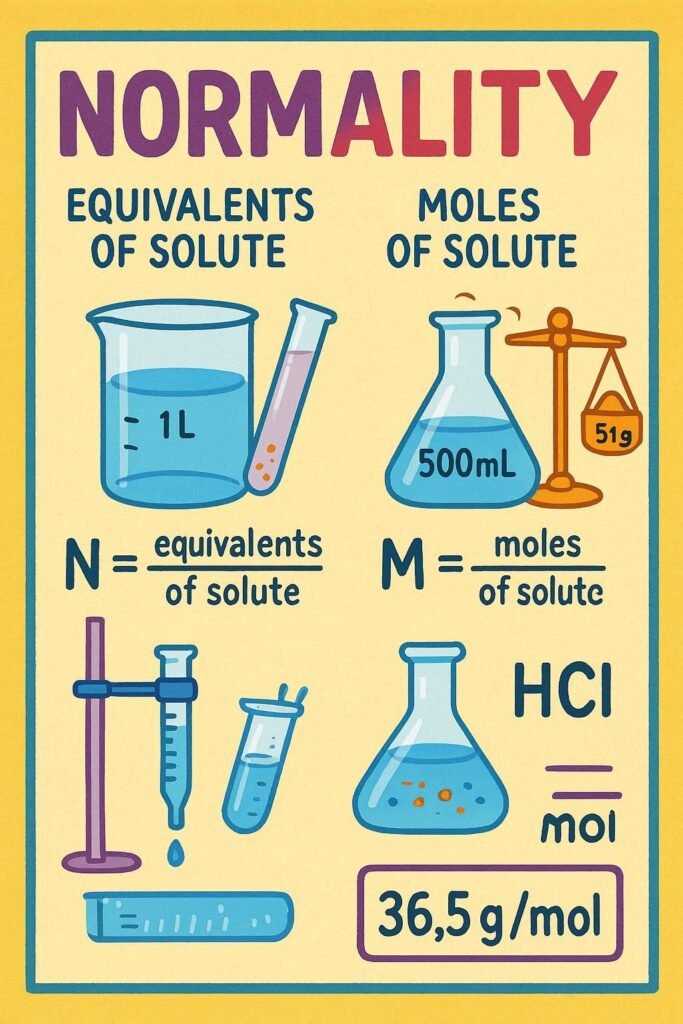
Normality measures the concentration of reactive units (equivalents) per litre of solution, whereas Molarity measures the number of moles of solute per litre of solution
What Is Difference Between Normality and Molarity: Get mastery in 2 Minutes
.
Normality and Molarity measure solution concentration, but they’re not the same. Normality measures the concentration of reactive units (equivalents) per litre of solution, whereas Molarity measures the number of moles of solute per litre of solution
What Is Difference Between Normality and Molarity?
Feature
Molarity (M)
Normality (N)
Definition
Moles of solute per liter of solution
Equivalents of solute per liter of solution
Depends On
Only the solute’s molecular formula
Type of reaction (acid-base, redox, etc.)
Reaction Specific?
No
Yes
Units
mol/L
eq/L
Example (H₂SO₄)
1 M = 1 mol H₂SO₄/L
1 M = 2 N (since H₂SO₄ donates 2 H⁺)
Normality vs Molarity (Source: Bing)
What is Normality (N)?
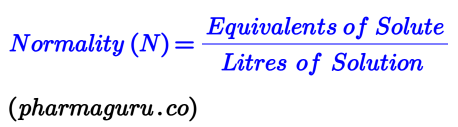
Normality measures the number of equivalents per litre of solution. An equivalent is the amount of a substance that reacts with or supplies one mole of H⁺ ions (in acid-base reactions) or one mole of electrons (in redox reactions).
What Is Difference Between Normality and Molarity: Get mastery in 2 Minutes 4
In HCl (which donates 1 H⁺), 1 M = 1 N.
In H₂SO₄ (which donates 2 H⁺), 1 M = 2 N in acid-base reactions.
Note: Unlike molarity, normality depends on the type of chemical reaction. For instance:
What is Molarity (M)?
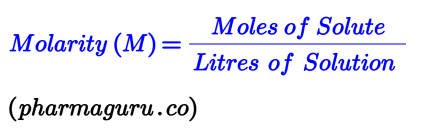
Molarity is the number of moles of solute per litre of solution. It’s one of the most commonly used units of concentration in chemistry.
What Is Difference Between Normality and Molarity: Get mastery in 2 Minutes 5
For example, if you dissolve 1 mole of NaCl in 1 litre of water, you get a 1 M NaCl solution.
When to Use Molarity vs. Normality
Use Molarity for general concentrations, especially in stoichiometric calculations and preparing standard solutions.
Use Normality in:
Titrations (acid-base or redox)
Situations involving equivalent weight
Reactions where ion exchange is important
Expert Tip: How to Convert Between Molarity and Normality
Normality (N)=Molarity (M)×n-factor
n-factor = number of H⁺ or OH⁻ ions replaced or accepted per molecule, or electrons transferred in redox.
Conclusion
While molarity tells you how many moles of a compound are in a liter, normality focuses on how many reactive units (equivalents) are involved. That’s why understanding the reaction type is crucial when deciding which unit to use.
Getting this distinction right ensures accurate lab results, efficient chemical calculations, and, ultimately, a better understanding of the reactions you’re working with.
What is the Difference between normality and molality?
Normality measures the concentration of reactive units (equivalents) per litre of solution, whereas Molarity measures the number of moles of solute per litre of solution.
Further Reading
Practical Titration: Prof. Dr. Leo Gros | Peter A. Bruttel | Marcus von Kloeden
Advanced Practical Inorganic Chemistry: Dr Y. Thakur | Dr J. Thakur