Dr. Pramod Kumar Pandey — Pharmaceutical Trainer, Founder of PharmaGuru, Blogger & Analytical Expert with 31+ years of experience in leading global and Indian pharmaceutical companies.
A QMS is a structured framework of policies, processes, procedures, and resources designed to ensure that pharmaceutical products consistently meet quality, safety, and regulatory standards throughout their lifecycle
QMS (Quality Management System) In Pharmaceuticals: Easy Learning With FAQs
QMS (Quality Management System) in pharmaceuticals
A Quality Management System (QMS) in pharmaceuticals is a structured framework of policies, processes, procedures, and resources designed to ensure that pharmaceutical products consistently meet quality, safety, and regulatory standards throughout their lifecycle.
The pharmaceutical QMS plays a critical role in maintaining product safety, efficacy, and compliance with global regulatory authorities such as the U.S. Food and Drug Administration (FDA) and the European Medicines Agency (EMA). It ensures that all operations—from manufacturing to distribution—follow strict quality guidelines.
5 Key Objectives of QMS in Pharmaceuticals
Ensure consistent product quality and safety
Maintain compliance with regulatory standards such as Good Manufacturing Practices (GMP), Good Distribution Practices (GDP), and ISO standards
Improve process efficiency and risk management
Support continuous improvement in pharmaceutical operations
Enhance documentation and traceability
Want to master HPLC method development & Validation?
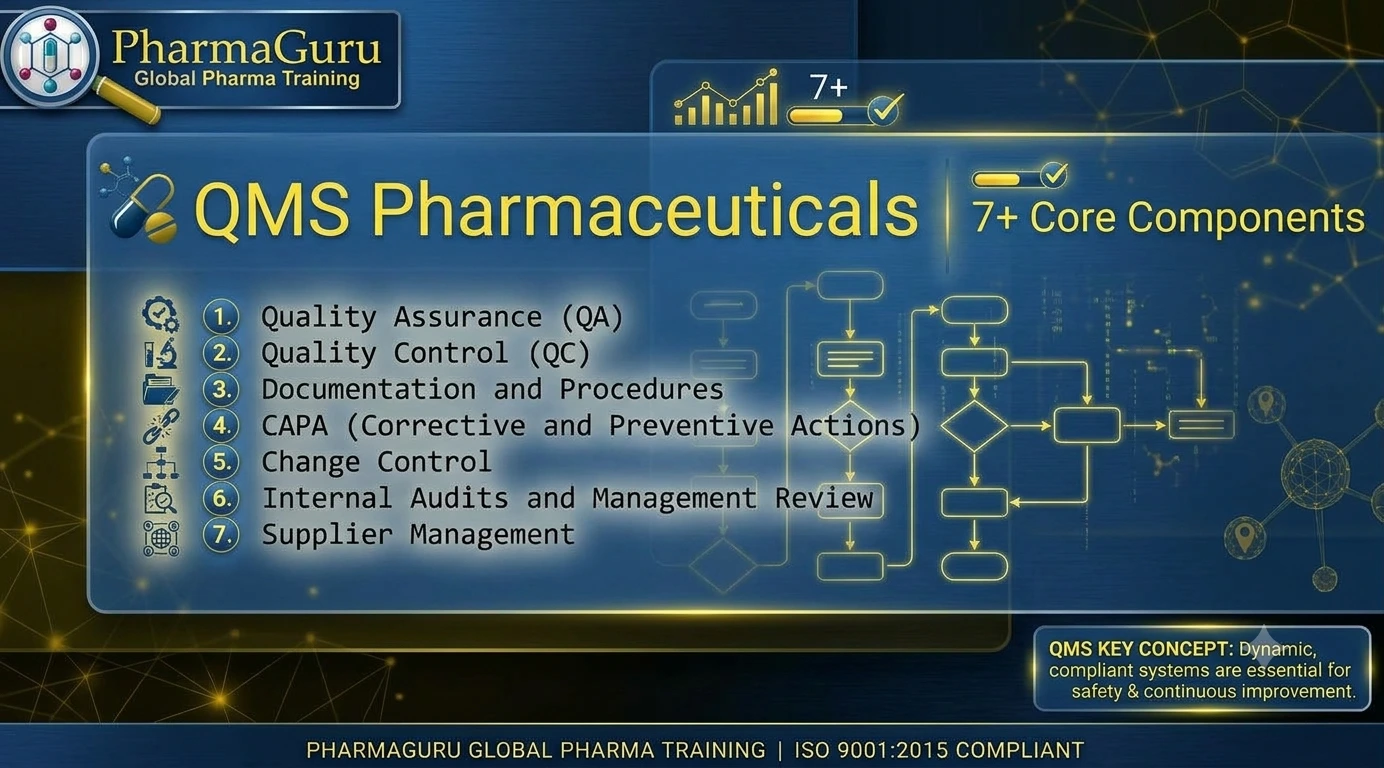
7+ Core Components of a Pharmaceutical Quality Management System (QMS)
QMS (Quality Management System) In Pharmaceuticals: Easy Learning With FAQs 2
A Pharmaceutical Quality Management System (QMS) is built on several key components that ensure product quality, regulatory compliance, and patient safety. These core elements work together to maintain consistency across all stages of the product lifecycle.
1. Quality Assurance (QA)
Quality Assurance (QA) focuses on ensuring that pharmaceutical products are consistently manufactured and controlled in accordance with predefined quality standards and regulatory guidelines.
Conducts systematic audits and reviews
Ensures compliance with Standard Operating Procedures (SOPs)
Oversees documentation and process validation
Maintains overall quality system integrity
2. Quality Control (QC)
Quality Control (QC) is responsible for testing and verifying the quality of raw materials, in-process samples, and finished products.
Ensures products meet specifications before release
3. Documentation and Procedures
Comprehensive documentation systems are essential for maintaining traceability, transparency, and compliance.
Includes Quality Manuals, SOPs, batch records, and reports
Ensures proper record-keeping and data integrity
Supports regulatory inspections and audits
4. CAPA (Corrective and Preventive Actions)
The CAPA system is a critical component used to identify, investigate, and resolve quality issues.
Analyzes root causes of deviations
Implements corrective actions to fix issues
Establishes preventive actions to avoid recurrence
Drives continuous improvement
5. Change Control
Change Control ensures that any modifications to processes, equipment, materials, or systems are properly evaluated and approved before implementation.
Prevents unintended risks to product quality
Ensures regulatory compliance
Maintains process consistency and control
6. Risk Management
Risk Management uses a science-based approach to identify, assess, and mitigate risks that could impact product quality.
Applies tools like risk assessment and risk analysis
Prioritizes critical risks
Supports decision-making and compliance
7. Internal Audits and Management Review
Regular internal audits and management reviews are essential to evaluate the effectiveness of the QMS.
Identifies gaps and improvement opportunities
Ensures alignment with regulatory requirements
Promotes continuous quality improvement
8. Supplier Management
Supplier Management ensures that all raw materials, vendors, and service providers meet required quality standards.
Performs supplier qualification and audits
Monitors vendor performance
Ensures consistent quality of input materials
Expert Tips
The core components of a pharmaceutical QMS—including QA, QC, CAPA, risk management, and supplier control—form the foundation of a robust quality system. Together, they ensure regulatory compliance, product consistency, and patient safety, making QMS an essential part of the pharmaceutical industry.
Why is QMS Important in Pharmaceuticals?
A robust pharmaceutical QMS ensures:
Patient safety and product reliability
Enhanced product quality: Ensures manufacturing consistency and reduces the risk of defects.
Regulatory compliance: Helps meet international standards and regulations.
Risk mitigation: Reduces the risk of non-compliance, recalls, and legal actions.
Customer trust: Ensures safety and efficacy, building confidence in pharmaceutical products.
Operational efficiency: Streamlined processes lead to cost savings and better resource utilisation.
Product Safety and Efficacy: Ensures the final product is safe for consumers.
Continuous Improvement: Promotes a culture of proactive improvement, enhancing process effectiveness and reducing errors.
Common QMS Guidelines
ICH Q10: Pharmaceutical Quality System model.
WHO GMP: Guidelines for pharmaceutical manufacturing.
ISO 13485:2016: Specifically for medical devices and combination products
What is the role of eQMS in Modern Pharmaceuticals?
Many companies use electronic Quality Management Systems (eQMS) to streamline processes. An eQMS improves:
Efficiency through automation
Data accuracy and integrity
Regulatory compliance
Real-time monitoring and reporting
7 Key QMS Implementation Steps in Pharmaceuticals
Implementing a Quality Management System (QMS) in pharmaceuticals requires a structured, step-by-step approach to ensure regulatory compliance, product quality, and operational efficiency. Below are the key steps involved in successful QMS implementation:
1. Gap Analysis
The first step in pharmaceutical QMS implementation is conducting a gap analysis to evaluate existing processes against regulatory requirements.
Compare current practices with standards like GMP, GDP, and ISO
Identify compliance gaps and improvement areas
Develop an action plan to address deficiencies
2. Establish Quality Policy and Objectives
A clear quality policy defines the organization’s commitment to quality and regulatory compliance.
Set measurable quality objectives
Align goals with regulatory expectations and business strategy
Ensure top management involvement and accountability
3. Documentation Control
Effective documentation control is essential for maintaining traceability and consistency.
Develop and standardize Standard Operating Procedures (SOPs)
Create quality manuals, workflows, and records
Ensure proper version control and document approval systems
4. Training Management
Proper training management ensures that employees understand and follow QMS processes.
Provide training on SOPs, compliance requirements, and systems
Maintain training records and competency assessments
Conduct regular refresher training programs
5. QMS Deployment and Integration
After documentation and training, the QMS should be implemented across all departments.
Integrate QMS into daily operations
Ensure cross-functional coordination and communication
Utilize electronic QMS (eQMS) tools for efficiency
6. Monitoring and Performance Evaluation
Continuous monitoring and review are critical for maintaining QMS effectiveness.
Track key performance indicators (KPIs)
Conduct internal audits and compliance checks
Use digital tools like Scilife for real-time monitoring and compliance tracking
Follow best practices and industry guidance from Leucine
7. Continuous Improvement
A successful QMS is built on continuous improvement and proactive quality management.
Implement CAPA (Corrective and Preventive Actions)
Analyze trends and reduce recurring issues
Enhance processes based on audit findings and feedback
Conclusion
Implementing a pharmaceutical Quality Management System (QMS) involves systematic planning, execution, and continuous monitoring. By following key steps such as gap analysis, documentation control, training, and performance evaluation, organizations can ensure regulatory compliance, product quality, and long-term operational excellence.
QMS (Quality Management System) in pharmaceuticals refers to a structured system of processes, procedures and resources aimed at ensuring that pharmaceutical products consistently meet required quality standards.
What are the 4 elements of the QMS?
Quality planning, control, assurance, and improvement are the4 elements of the QMS
What are the 4 pillars of quality management system?
Quality planning, control, assurance, and improvement are the 4 pillars of a quality management system
What are the 7 steps of the Quality Management System?