Free Online Pharmaceutical Training Program
The following three courses are 100% free (₹0):
1. Free Practical HPLC Fundamentals
2. Career in the Pharmaceutical Industry: How to Start and Succeed
Want More? Upgrade Your Skills!
Get access to:
✔ Certificate of Completion
✔ Downloadable Study Materials
✔ Career Guidance & Support
✔ Practical Industry Knowledge
Join Our Premium Course:
Every Pharma Professional Foundation Course |💰 Course Fee: Just ₹199
Take the next step toward building a successful career in the pharmaceutical industry!
👉 Enroll Today and Start Your Journey!
FAQs
Yes, all our core learning content is freely accessible with no hidden costs.
No problem! You can continue learning with full access to all courses absolutely free — no payment required.
Yes! You can start for free and upgrade to Primium whenever you’re ready
Verified certificates, downloadable resources, live sessions, offline access, and more.
PharmaGuru Pro is designed for serious learners and professionals who want recognition, deeper learning, and verified proof of skills.
Need Help?
Contact us on WhatsApp: +91-9910157319 Or Email: admin@pharmaguru.co
When & How?
- Schedule: Weekly as per the above schedule
- Mode of Delivery: Live sessions conducted via Google Meet, featuring expert-led instruction and professional presentations.
- Session: 1 (40 to 60 minutes)
- Language: English
Note: Each course in this category will be completed in one session (Duration: 60 to 90 minutes)
Who Should Attend?
- Job Seekers & Fresh Pharmacy Graduates/Post Graduates/Post Doctorates: Recent Fresh Pharmacy Graduates/Post Graduates/Post Doctorates and aspiring candidates aiming to launch a career in the pharmaceutical industry.
- Knowledge Enthusiasts: Anyone with a keen interest in gaining in-depth insights into pharmaceutical processes and industry standards.
- Industry Professionals: Individuals seeking to upskill and stay current with the latest pharmaceutical practices.
Typical Training Details
Free Online Titration Training
Key Learnings
- Overview of Titration Types in Pharma Industries
- Acid–Base Titration: Neutralisation reactions; indicators include methyl orange, phenolphthalein, bromophenol blue, etc
- Precipitation Titration: For ionic species; e.g., AgNO₃ titrated against Cl⁻ using potassium chromate indicator
- Redox Titrations:
- Iodometric: Liberation of iodine, titrated with sodium thiosulfate; uses starch indicator
- Iodimetric: Direct titration with iodine
- Complexometric (EDTA) Titration: Chelation of metal ions like Mg²⁺, Zn²⁺ using EDTA; indicators include Eriochrome Black T, Pyrocatechol, Calmagite
- Non‑Aqueous (Perchloric Acid) Titration
Free Online HPLC Training
Key Learnings
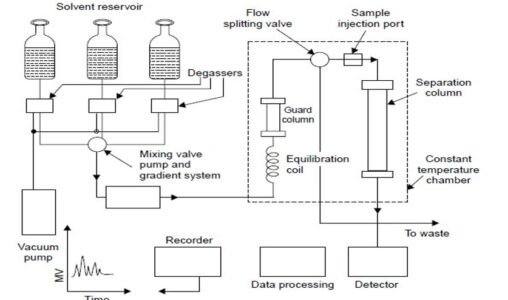
- Fundamentals of HPLC
Grasp the principles of how liquid chromatography separates compounds via a liquid mobile phase and a solid stationary phase, focusing on different ≤RP‑HPLC and other modes. - Choosing the Right Mode and Components
Learn how to select the appropriate HPLC mode (e.g., reverse-phase, normal-phase, size-exclusion, affinity), together with the right column chemistry and mobile phase for specific analytes. - Optimising Method Parameters
Dive into optimising HPLC conditions—flow rate, temperature, mobile phase composition, and detection settings—to balance resolution, run time, and reproducibility. - Applications Across the Product Lifecycle
Discover how HPLC supports drug development—from screening in discovery, through formulation studies and ADME (absorption, distribution, metabolism, excretion) profiling, to quality control of finished products.
Free Online GC Training
Unlock the world of analytical chemistry with our Free Online Gas Chromatography (GC) Training. This comprehensive, self-paced course is designed to equip you with the essential skills and knowledge needed to excel in gas chromatography techniques, widely used in various industries like pharmaceuticals, environmental science, and food safety.
What You’ll Learn?
- Fundamentals of Gas Chromatography: Understand the theory behind GC, its components, and how it works.
- GC Instrumentation: Learn about the different parts of a GC system, including the injector, column, and detector.
- Sample Preparation: Gain practical knowledge of sample handling and preparation for accurate results.
- Chromatographic Data Interpretation: Learn to interpret chromatograms and make sense of the results.
- Troubleshooting Tips: Discover common GC issues and how to resolve them.